


OH Spotlight - Maj-Gen Bruce DSO MC
Former Haileybury pupil Maj-Gen Bruce played a key role in not only WW1, but is also acknowledged as the ‘Founding Father’ of the Malay regiment. Below is an edited extract from the recently released ‘The Malay Experiment: The Colonial Origins and Homegrown Heroics of The Malay Regiment’ by Stuart Lloyd. Now available in paperback, ebook, and audiobook.
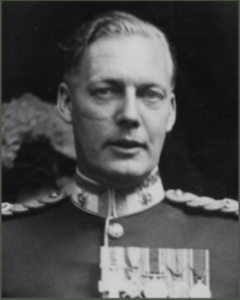
Port Dickson, Malaya, 1933. The straight-nosed, wavy haired officer with a crescent-shaped scar on his right cheek looked every inch – and his height was considerable – the war hero. Which indeed he was.
Captain George McIllree Stanton Bruce MC was only 36 but had already lived two lifetimes of adventure, having signed on to the Lincolnshire Regiment as a slender 17-year-old fresh out of Haileybury, via Woolwich Military College, then Sandhurst.
How he came to be at Haileybury is not exactly clear, because he was Canadian, born to a major in the Mounties who patrolled the wild Northwest Territories in the wake of the Klondike gold rushes in the Yukon. His father Donald rightly sniffed a fortune to be made in real estate opportunities in Vancouver, and left the Mounties.
George Bruce’s great-grandson Orson Fry maintains that family folklore has George (or ‘McI’ as his family called him) sent to prep school at Ascham St Vincent’s in Eastbourne, Sussex, before being sent on his own “Paddington Bear-style” to London, with 50 sovereigns tied around his neck by his mother in a leather pouch. “And these paid for his education at Haileybury.”
At Haileybury he participated actively in sports, particularly fencing, cricket, and was in the rugby 2nd XV.
Haileybury boasts 17 VC holders among its alumni, and the scar on war veteran Bruce’s cheek was a daily reminder of what many considered to be the worst day in the history of the British Army to that point: 1 July 1915.
He’d been shot in the face during the Battle of the Somme.
After two months’ medical recuperation, (Acting) Captain Bruce was back to lead his men. Next came the Battle for Cambrai in Gonnelieu, France. His company was strongly counter-attacked yet he darted from post to post cheering on his men while under heavy fire, and the enemy was finally beaten back. The 20-year-old was awarded the Military Cross for that conspicuous gallantry. ‘It was greatly owing to his fine leading and example that the enemy attack was beaten off,’ read the citation.
Then just a few months later the Battle for Passchendaele erupted, in the Belgian town of Ypres. While walking point for a battalion of 620 men, advancing slowly, Bruce was struck in the chest by machine-gun fire. A stretcher party was called up. As he was being carried back, a shell exploded nearby further injuring him in the leg and shoulder. He was left in the open for 12 hours, unable to be retrieved as shells thudded into the flat fields around him. Amputation was seriously considered for his right arm, but the wound was deemed too close to the torso.
He was returned to the UK in mid-1916. Here it seems he chanced up his father Donald, who was with the Canadian Expeditionary Force bound for the Western Front. A letter was written home to assuage George’s mother, who’d not seen him for four years by this stage: ‘This is a fine strapping fellow and a most splendid soldier,’ his father wrote. ‘Has his world down fine and is a beautifully spoken chap. Manly, and most finished young fellow I have seen. He has more brains than I ever gave him credit for.’
Recuperated, though with his arm in a sling, George returned to Canada on convalescent leave. A Vancouver newspaper ran an article entitled ‘Real War Veteran, Though Just Qualified to Vote’, amazed by his experiences and gallantry though he was barely 21 years old. After a couple of months there, Bruce then headed back to England for his Military Cross to be presented personally to him by King George.
So he was just the man needed when on 1 March 1933 an experimental company was formed with the idea of developing a Malay regiment. He was put ‘on loan’ from the Lincolnshire Regiment to the Colonial Office.
The idea was for an all-Malay regiment to take some responsibility for security of the Federated Malay States, but the suitability of the Malay temperament for military discipline and bravery was as yet unknown. Sure, they knew war — after all, states such as Negri Sembilan, Pahang, Selangor and Perak had been feuding since anyone could remember — and being on a peninsula, they certainly had a good pedigree in piracy.
The central question was this: Can the Malays form a modern effective fighting force? That was at the heart of the experiment.
In front of him were the 25 recruits – including Raja Lope (the adopted son of the former Sultan of Perak), Mohamed Taib bin Jais, Ibrahim Sidek, and Adnan Saidi – selected from over 1000 applicants, many of whom had seen the opportunity advertised in their vernacular newspapers, such as Warta Malaya.
‘Good material, and keen,’ Bruce said. They needed to be, because he had high hopes: ‘They were going to be drilled and trained until their hands, feet, and hearts burned. They were not just going to be smart soldiers. They were going to be the smartest damn soldiers anybody in the peninsula had ever seen, heard or dreamt of. The same would go for their turnout, kits, and behaviour on leave. If anybody let the side down … it was letting down their own Malay people, their own Sultan, and family down.’ A high calibre of recruit was found and selected —many from good families and others from modest rural kampongs, looking for a good opportunity. Nearly half of them were English speaking.
The regiment was initially to be run on askari lines, meaning British officers overseeing local other ranks (a concept used widely in Africa since the 1890s). Bruce had three British staff officers, who’d arrived in Malaya ahead of him, his adjutant being Adj Capt Kenneth Exham (from the Duke of Wellington’s Regiment), CSM E Field (from the Royal Lancasters), RSM Albert McCarthy (from the Volunteer Forces in Malaya), plus No 1 Clerk, Malaya-born Chinese civilian Lim Paul.
Each side sized each other up. Bruce knew the way to galvanise the Malays was to make this ‘their’ regiment: something more local than just a British transplant.
He had a valuable sidekick in Ken Exham, who had been a lieutenant with the Duke of Wellington’s Regiment in Singapore for a few years. His father was a Lt-Col, with attachments to the forces in Shanghai, previously, so, Asian exposure. His grandfather was Sir Robert Hamilton, awarded the KCB for his efforts in colonial administration in India, Australia, etc.
When the Duke of Wellington’s were re-posted to the UK in 1931, Exham was seconded for service under the Colonial Office, and made Adjutant of the Straits Settlement Volunteer Force (Malacca Vol. Corps). So he had good local experience, and the 30-year-old took on the local rank of captain.
Field also had some local exposure, having been based at Butterworth with the Penang and Province Wellesley Volunteer Corp (receiving a long-service medal there) before signing on with the York and Lancaster Regiment.
With Exham, Bruce set about designing the regiment’s uniform and insignia. Malay elements included two harimau berjuang (fighting tigers), a local kris dagger, an Oriental crown, and the colours green (being the colour of Islam) and yellow (being the colour for Malay royalty). British interests were represented by the colour red.
A motto ‘Ta’at dan Setia’ meaning ‘loyal and true’ was agreed on, written in Jawi script, the Arabic-based system — going from right to left — for writing the Malay language. More colloquially, it might also be translated as ‘last man standing’.
Next, how to localise the uniform? A green velvet songkok cap, white stiff-collared baju top and trousers, with a green-and-red silk sarong was deemed suitably smart for their walking-out dress. A local Chinese tailor, Kwong Yuen, was assigned to cut all the first uniforms and mufti for the recruits.
But moulding this new regiment was hard work, and the other thing Bruce instinctively felt he knew about the Malay character was the central importance of food. ‘Good soldiers need good food,’ he reflected. ‘I think more recruits were obtained by the words “Makan ada baik” than by “Ta’at dan setia”,’ he once said, meaning ‘We have good food’.
Food might’ve been a more important driver than money. The Indian Army system paid locals about one third of what their British counterparts received (meaning a Malay private would be paid less than £3 per day in today’s money). Barrack visits by parents and families always played up the food, to show their sons were being well fed and looked after, and that the British Army was a benevolent European organisation not to be afraid of. It was a very strong showing of semangat kekeluargan, demonstrating a key Malay concept of the spirit of a familial bond, a kinship and sense of togetherness. Also the cohesion of this diverse group — brought together from many Malay states, as well as different British regiments — was easy to see. The Malays value this harmony, called perpaduan, of everyone mucking in together.
And then the serious square-bashing commenced, under RSM McCarthy who – despite his lean physique – had a parade voice ‘like a saw cutting galvanised iron, and spoke fluent Malay with a cockney accent’ according to Bruce, who’d done a crash course in the language at the School of Oriental Studies in London. McCarthy introduced them to weapons training and tactical work. Commands were in English, instruction in Malay.
McCarthy’s extensive experience and leadership with the Royal Lincolnshire Regiment were instrumental in instilling British military standards, while simultaneously respecting and integrating Malay cultural values. As such they established a unique military ethos and ‘flavour’ for the regiment. His passionate following of Chelsea FC meant he probably bonded well with the local guys over football, too, the code having been introduced to the locals in the late-19th century by the colonials. They took to it avidly.
Bruce also played alongside his men, including Malay privates, in the company’s cricket team. He was an all-rounder, batting, bowling, even wicket-keeping to great effect for a tall man. Most importantly, this was an informal social inter-cultural bonding for all ranks.
Five months was the allocated training window, but within four months Bruce was ready to show his experimental Malay recruits to the world. In August 1933 the High Commissioner Shenton Thomas was invited to witness their work. What astonished the onlookers that day – apart from the crisp white uniforms against the dark skin of the men – was when they performed a complex drill which included fixing and unfixing bayonets while on the march. This complicated exercise was seldom performed by units of the British Army, yet the Malays executed it flawlessly. ‘Both in their appearance and the precision of their movements [they displayed] the very acme of military smartness,’ trumpeted the Straits Times. ‘The good results attained so far have been attributable to the willing response made by the men as much as to good handling, organisation, and thorough training. It is sufficient to say that the first batch of recruits has done credit to their race and the Federated Malay States.’ There was much hopefulness that this would lead to the Malay Regiment replacing the Burma Rifles (a seconded unit, stationed in Taiping, Malaya). That was the perceived benchmark.
The High Commissioner was most impressed, immediately recommending an extension of the programme, the expansion of the unit up to 150 recruits — a full-sized company — and promotion of Bruce to major.
The first experimental phase was over. The first test had been passed. So in 1935 the 1st Experimental Company became the Malay Regiment, and their development continued. The recruits were enlisted on a three-year engagement.
Bruce was promoted to the local rank of Lieutenant-Colonel in 1936, the same year he went on furlough and got married to young actress Diana Hance after a whirlwind two-week courtship.
By 1938 his five-year tour of duty was up; it was time for Lt-Col Bruce to move on. He had out-performed on the objectives, and was awarded the OBE. A colourful farewell was staged for him at which he looked around, feeling justifiably proud of the barracks buildings which had risen on the former plantation, the Officers Mess, and listening to their own regimental Band and Drums. But most importantly, ‘We had 10 Malay officers, all chosen from the ranks.’
Bruce praised his men for their high reputation for smartness and efficiency. But he closed his speech by saying: ‘Your most searching test still had to come under fire.’
Bruce himself was privately reflecting on the fact that ‘the only test the Malays had not had was the test of war, and how they would behave was the unknown factor.’
He had created the youngest regular regiment in the Colonial Empire, with a high morale and only one single desertion in all those years. Sir Shenton Thomas, Governor of the Straits Settlements, honoured him by saying, ‘I don’t recall a better example of the right man in the right place. Bruce has left it a unit of which we are all proud and in whose future performance we have full confidence. If I were asked to suggest the secret of his success, I should say that it is the confidence in their officers which he has been able to inspire in successive batches of recruits. They have learned gradually to have confidence in themselves.’
The Straits Times report of the day built on this: ‘It is not one man in ten thousand who, not being a Malay linguist and having had no previous contact with that race, could have taken recruits from the kampongs (villages) and created one of the smartest regiments in the colonial forces of the British Empire. Assuredly this country is proud of it and feels whole-hearted admiration for the achievement of Colonel Bruce as its first commanding officer.’
Just three years later, the regiment proved itself under fire against the Japanese in Malaya and Singapore, forging its DNA under the most ferocious and desperate circumstances. A performance which was recognised in 1947 by its ascension to the Royal Malay Regiment (Rejimen Askari Melayu DiRaja). They went on to further prove themselves in the Malayan Emergency and the Konfrontasi conflicts.
And how extraordinary to think that a young man from Haileybury is considered the founding father of the Malay Regiment, which proudly celebrates its 90th year in 2025. We salute you, Major-General Bruce DSO MC.
—
This article is an edited extract from ‘The Malay Experiment: The Colonial Origins and Homegrown Heroics of The Malay Regiment’ by Stuart Lloyd. Now available in paperback, ebook, and audiobook from Amazon.
Copyright 2025. All rights reserved Stuart Lloyd.